Prototyping
CNC vs 3D Printing for Prototypes: A Decision Table
Choose between CNC and 3D printing by question, not acronym: strength, heat, finish, lead time and cost crossover compared with real decision rules.
2026-10-20 · Prototyping · 9 min read · by MOMAKING Engineering
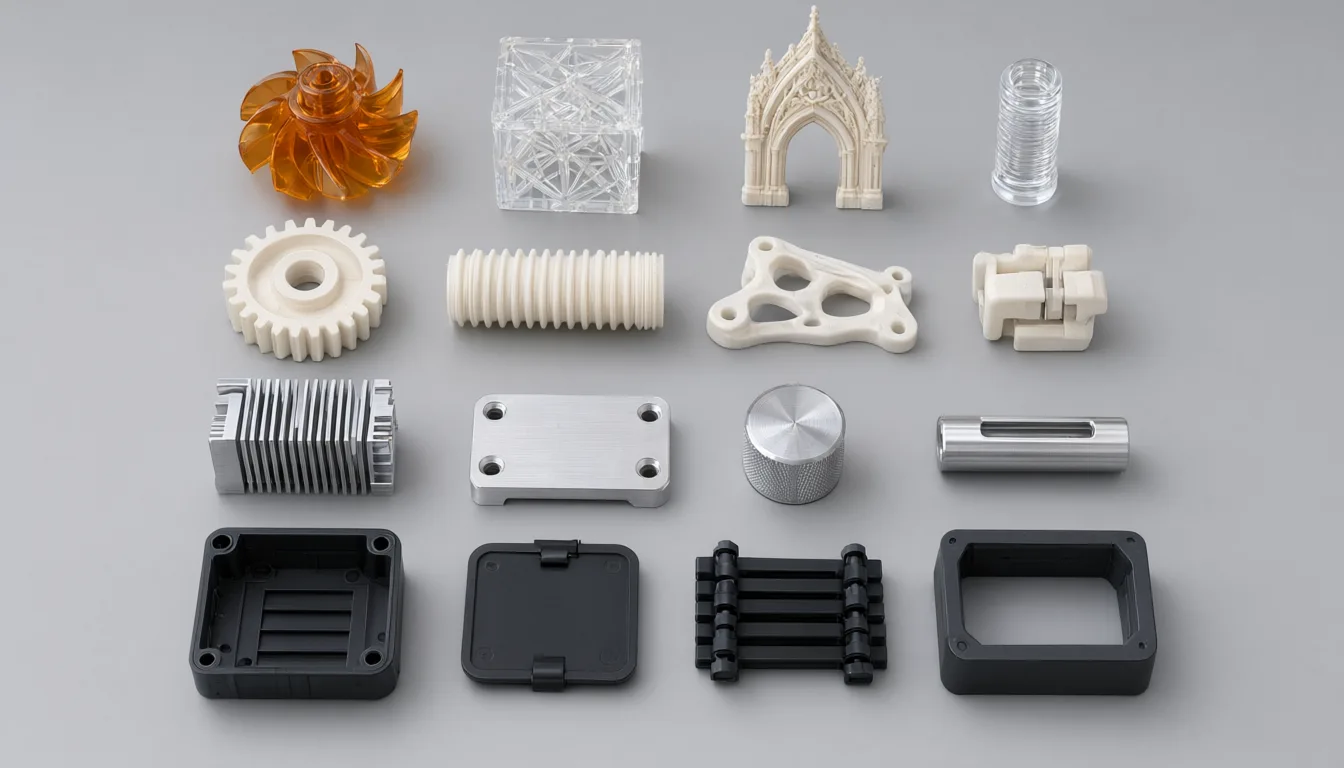
Every quote week starts with the same question on a different part: print it or machine it? The honest answer is never "3D printing is cheaper" or "CNC is better" — it depends which uncertainty the prototype must kill this week. This article is the decision table our own engineers route files with.
The One-Sentence Rule
Print when the question is shape; machine when the question is behavior. If the prototype must look right, fit right or prove an assembly, resin printing answers in 24 hours for a fraction of the cost. If it must carry a load, survive a drop, run hot, or show a customer what the anodized production part will actually look like, machined metal is the answer — and paying two days and a few more dollars beats three failed print drafts.
The Decision Table
| Criterion | 3D print (SLA/SLS) | CNC machining |
|---|---|---|
| First part in | 24 h (resin), 24-48 h nylon | 2 working days typical aluminum |
| Cost at 1 pc, small part | $5-40 typical | $60-400 typical (setup-dominated) |
| Cost at 100 pc | Still per-part; scales linearly | Setup amortizes; often underprints |
| Strength | Layer-bonded; nylon tough, resin brittle thin | Wrought material, full strength |
| Heat | Resin ~60 °C, tough ~80 °C, nylon ~90 °C | Metal: hundreds of °C; PEEK ~250 °C |
| Threads & inserts | Print-then-insert works; printed threads weak | Real tapped threads, pressed inserts |
| Surface story | Printed look unless heavily finished | Anodize, passivate, paint like production |
| Geometry freedom | Internal channels, lattices, one-piece mechanisms | Tool-access rules apply |
| Tolerance | ±0.05-0.2 mm by process | ±0.05 mm standard, ±0.01 critical |
| Revisions | Minutes to reprint | Hours-days; queue-held at our shop |
Worked Examples From Real RFQs
Drone gimbal bracket, 10 iterations this month. Printed tough resin for v1-v6 (each under $30, same-day), then machined 7075 for the load-tested v7 and anodized black. Printed from scratch would have died at the vibration test; machining from scratch would have died at the iteration count.
Clear fluidic manifold, four weeks. Only route: SLA clear resin, polished ports, pressure-tested at 2 bar. Machining the same internal serpentine would have cost five figures and six weeks in segmented plates.
Aluminum heatsink housing, 300 pcs in six weeks. Machined prototypes at 2 days validated fit; production moved to die casting at 300 pcs where per-part cost crossed under the machined price. The prototype choice was "machine" because the customer needed the anodized story for their launch video.
The Crossover Most People Miss
People ask where printing becomes cheaper than machining. The interesting question is the reverse: at what quantity does machining become cheaper than printing? For a small aluminum part, that crossover usually lands between 30 and 150 pieces — beyond it, per-part print cost (machine-hours on a printer are per-part, forever) exceeds amortized setup on a VMC. If your "prototype" is really a short production run of 200 units, machining them is often the same price and every unit is production-grade.
Questions That Should Route You to a Human
- Two candidate materials and you need the strength math for a specific load path
- Printed look must match an anodized production part for a photoshoot
- Internal geometry that prints but needs sealed, pressure-rated surfaces
- The deadline is a trade show and the date is not moving
Send the CAD and one sentence about the decision to [email protected] or WhatsApp +1 315-623-3808; the route pick comes back free with the quote.
Get this part priced
Upload your STEP file - AI quote in seconds, engineer-verified quote within 24 hours.