Speed Lane
Rapid CNC Prototype Service — Machined Parts in 2 Working Days
Functional machined prototypes, not resin look-alikes: in-stock aluminum, same-week finishing, revision rounds that keep your queue position.
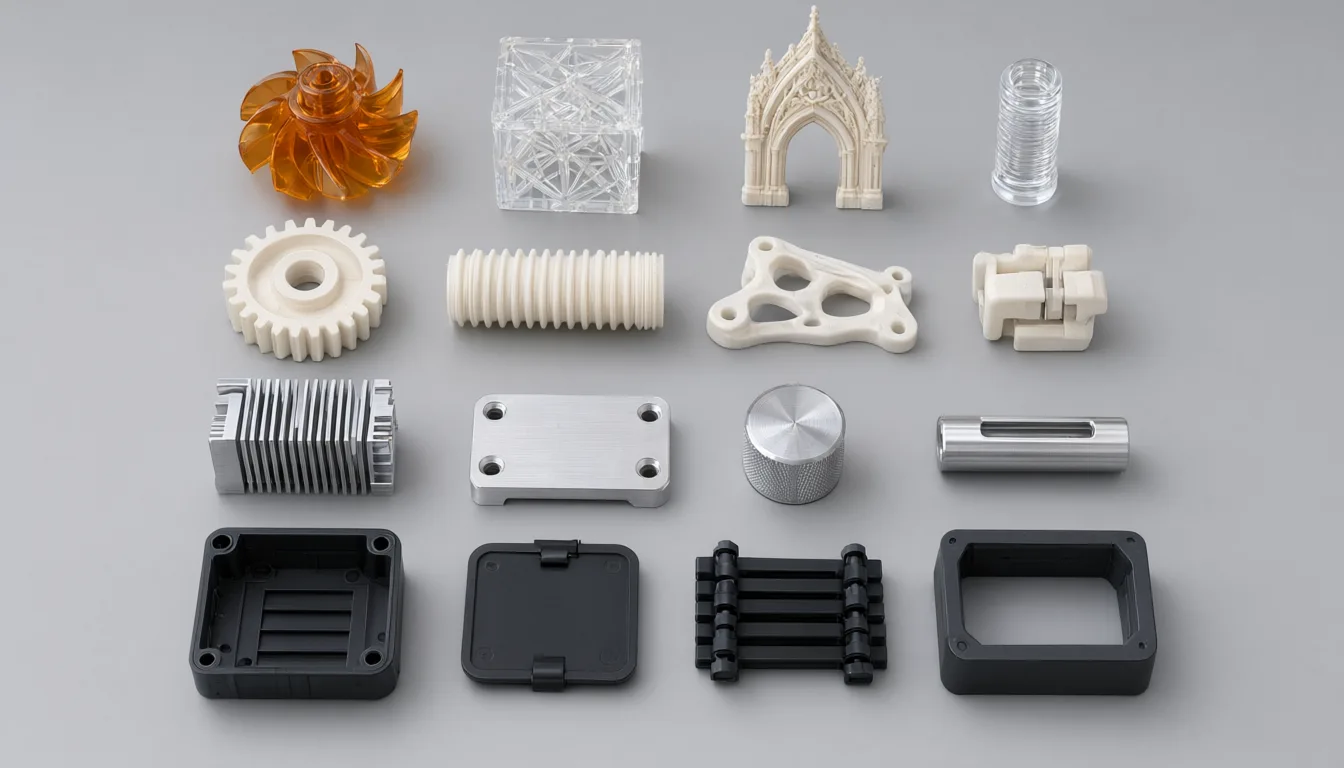
A machined prototype behaves like the production part when plastic printing cannot. When your design review needs real stiffness, real heat resistance, real threads that survive torque, or a surface that takes anodize and paint like the final product, a 2-day machined part answers questions that a resin model leaves open.
What the Rapid Lane Includes
- 2 working days off the machine for typical aluminum parts (6061/7075) with standard ±0.05 mm tolerance.
- Same-week finishing: clear or black anodize, bead blast, brushing on priority parts.
- Revisions welcome: v2 with a geometry tweak re-quotes in the queue position you already hold — revision rounds do not restart the clock on our PEKTS-MoE platform.
- One-off pricing that is honest: the quote itemizes setup vs. machining so you see what volume would save.
When to Machine the Prototype Instead of Printing
Print resin when you are validating shape, fit and aesthetics in the next 24 hours. Machine when the prototype has to work: press-fit an bearing, survive 120 °C, carry a torque spec on a steel insert boss, or show a customer the anodized finish you will actually ship. Machined ABS-look-alike housings in 6061 also expose draft and wall issues that resin hides — useful before you commit to a mold budget. If you are unsure, the prototyping program page maps each decision to a route.
How a 2-Day Part Moves
- Upload STEP + notes (function, what must hold, deadline date) on the quote page.
- Fast-track DFM: engineer confirms feasibility in hours, not days — one page of callouts, not a 20-slide report.
- Cut: in-stock aluminum goes straight to the VMC queue; photo update when chips fly.
- Check & ship: dimensional report with the parts; DHL/FedEx express worldwide.
The rapid lane runs the same shop, fixtures and inspectors as production — which is exactly why the part you approve today is the part your batch matches next month. Deadline questions go to [email protected] or WhatsApp +1 315-623-3808.
Frequently Asked Questions
Is the 2-day lead time guaranteed?
Do rapid prototypes get the same inspection?
Can I get 5 prototypes with quick design tweaks?
What if I need the part Friday and it's Tuesday in Europe?
What a Machined Prototype Should Actually Prove
Machined prototypes earn their premium when they answer behavior questions, and lose money when used as expensive shapes. Put your v1 through a one-sentence filter — what will this part prove that a $20 resin print could not? The valid answers we machine for, in rough order of frequency: structural truth (real alloy, real weldability, real bolt preload — the bracket actually holds the motor); thermal truth (aluminum heatsinks and housings measured with IR under real load); finish truth (the anodized sample your industrial designer signs before tooling release, because anodized 7075 is greyer than anyone wants to hear on a launch deck); assembly truth (real torque on real inserts, press fits that press, threads that survive the service manual); customer-trial truth (a field sample a client can drop, over-tighten and leave in the rain, reporting what actually happens). If the answer is “we need something shaped like it for a stand at a trade show,” resin is the correct purchase and we will quote it cheerfully at a fifth of the price.
Design Freeze vs Design Exploration — Two Different Contracts
Fast-turning work splits into two failure-prone modes: exploring while paying production prices, and freezing while still uncertain. We price them as separate lanes. Exploration: several geometry variants in the same alloy, same datum philosophy, quoted as a family — shared fixtures, shared tools, parallel queues; the cost curve flattens across variants because the second and third differ by CAM delta, not setup delta. Freeze-and-verify: final geometry, final finish, full CMM report, archived program and fixture — this package graduates directly to production, which is where the second batch stops paying setup at all. Declaring which lane you are on, in the RFQ's first line, lets the shop optimize the right thing. Two rounds of exploration machined production-style cost more than ten rounds of exploration machined exploration-style; we have the numbers on both.
Running the Schedule Against a Deadline Date
When your Friday is immovable (show opens, investor demo, regulatory sample due), the schedule works backward, not forward: cutoff = date minus transit minus finishing days minus machining days, with a stated confidence level. Transit choice is the most-controllable variable: express courier 3–5 days worldwide is the default planning figure, and a same-day clearance of customs paperwork is why we file commercial invoices before parts finish. Finishing is the sneaky second variable: black anodize adds a tank day, hard-anodize or plating longer, raw-ship-with-late-coat options exist when you hold risk tolerance. Machining is usually the smallest of the three days in the two-day lane. Tell us the real date and what happens if it slips one week, and the plan tells you which of the three variables to buy.
The Prototype-to-Production Paper Trail
A rapid-lane order builds the production file as it runs: the verified CAM program, the fixture design, the probe routine, the material lot, the measured first-article — all archived under your part number, versioned with each geometry revision. When the decision lands to produce, nothing re-starts: batch one inherits the proven setup instead of re-deriving it, and your part's whole measurement history is one export away when a customer asks. That archive is also why revision quotes are same-day: pricing reads the program delta (what the change adds in toolpaths) rather than re-quoting from zero. If your prototype phase looks cheap but every change costs a fortune in re-quotes and re-setups, the shop is starting over more often than it admits; check what your first order archives, because the file is the compounding asset.
Scheduling honesty belongs in this section too: the two-day lane is engineered (stock at the shelf, a lane reserved per day, anodize tank capacity matched to prototype throughput), not heroic. It fails predictably on exactly two request types — exotic alloys that must be purchased, and finishes with their own week-long lines (hard anodize, plating, heat treat). The quote marks those up front so your calendar absorbs the truth at the decision point, not at the deadline.
The Prototype Queue: How Revision Rounds Actually Price
Revision economics explain most prototype-price frustration elsewhere. When you order v1 machined aluminum, the shop spends its money on setup: fixture, program, proveout. A v1.1 wall-thickness tweak re-runs the program with a five-minute CAM change on your already-built fixture: same-day quote, half the lead time, and the price shows a delta instead of a new mountain. v2 with a new datum scheme rebuilds part of the fixture and re-probes: a mid-size quote delta, not a re-buy. A “completely different part that happens to look similar” resets to setup full price — that is honest, not punitive. The failure mode to avoid is the shop that prices every revision identically: they are starting from zero every time, and your week-two parts cost week-one money. Our revision quotes print the delta breakdown (CAM change / fixture change / new setup) because your iteration budget should know which kind of change it is making — same-fixture tweaks are cheap, and iteration is how good prototypes get made.
Practical revision protocol that keeps everything cheap and traceable: freeze the datum features across versions (everything else is allowed to move), version the file names v1_0, v1_1, v1_2 in the order system's archive, and keep superseded versions machined and stored — re-testing a past revision (did the thicker wall or the thinner one win?) costs only machine time from the archived program, and the measurement history of every version rides on the account.
Get this part priced
Upload your STEP file - AI quote in seconds, engineer-verified quote within 24 hours.